

Polina Osipova: A Living Inheritance
Curated by Yana Rovner
JO-HS is pleased to present A Living Inheritance, a solo exhibiton by Polina Osipova curated by Yana Rovner.
This exhibition brings together a body of work in which Polina Osipova transforms personal memory, her Chuvash ancestral lineage, and childlike imagination into tactile forms that function as hereditary artifacts, objects of play, and waking dreams.
Osipova’s practice speaks in an ancient, matriarchal language that forgoes linear time. Using the Chuvash traditions of embroidery and needlework passed down to her through generations of women, Osipova treats her craft as embodied knowledge. Repeating symbols, such as the bow and arrows, the heart as portraiture, and archival photographs appear throughout as intuitive patterns. Her materials are metaphors: the stories of her family are interwoven as textiles are interwoven, image interlacing with touch, memory with memory. The act of making becomes an act of remembering.
SELECTED WORKS
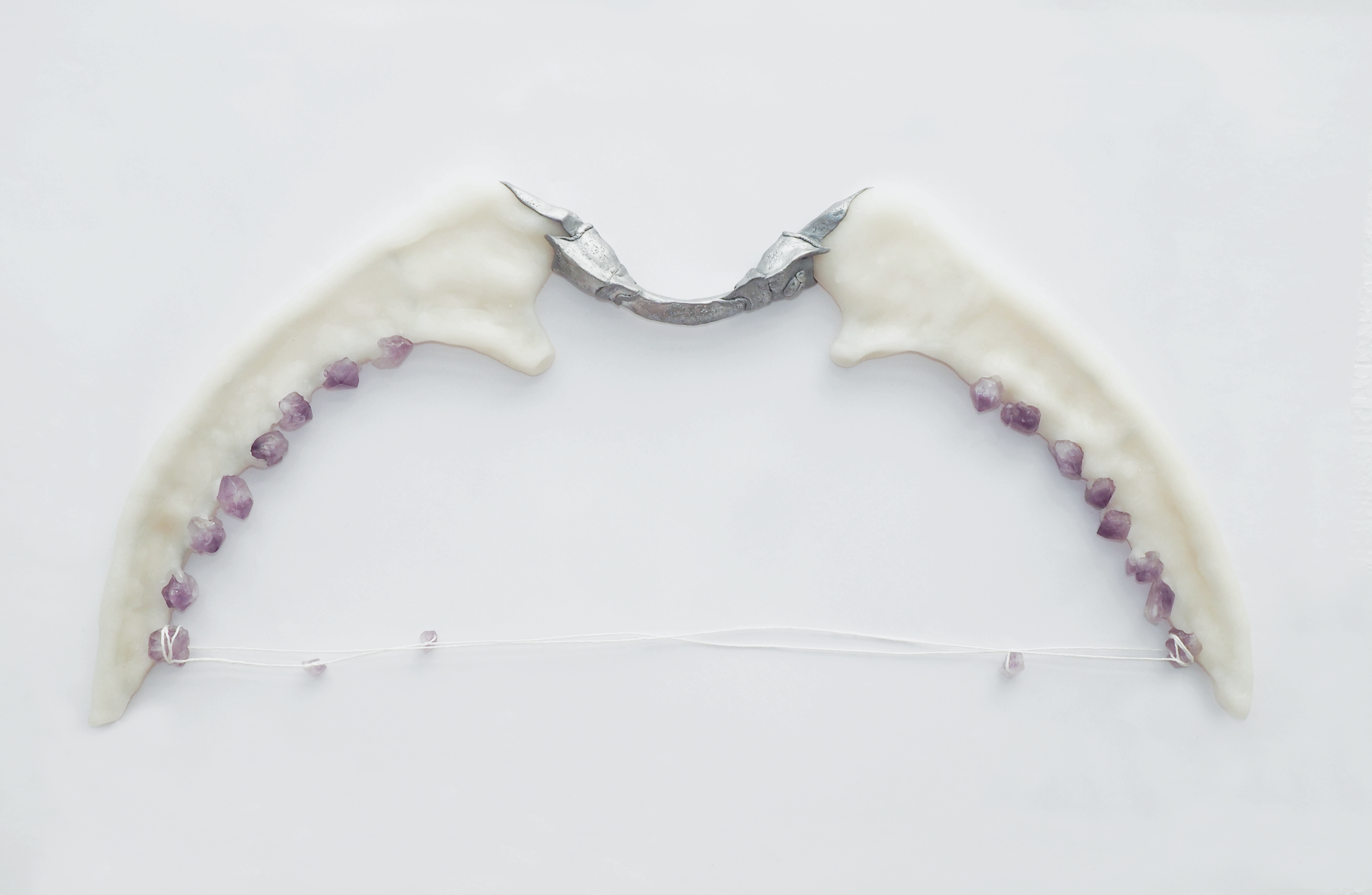
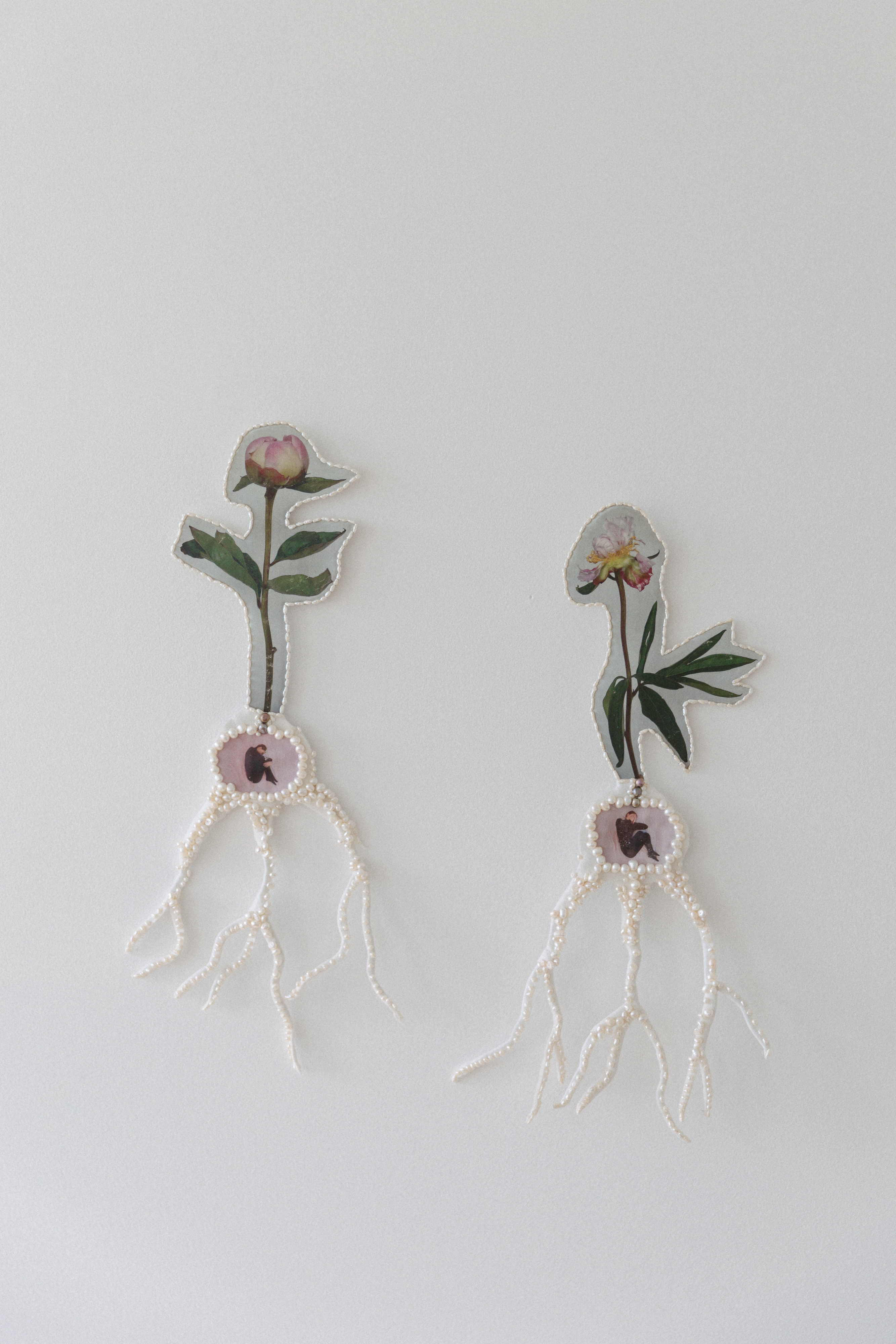
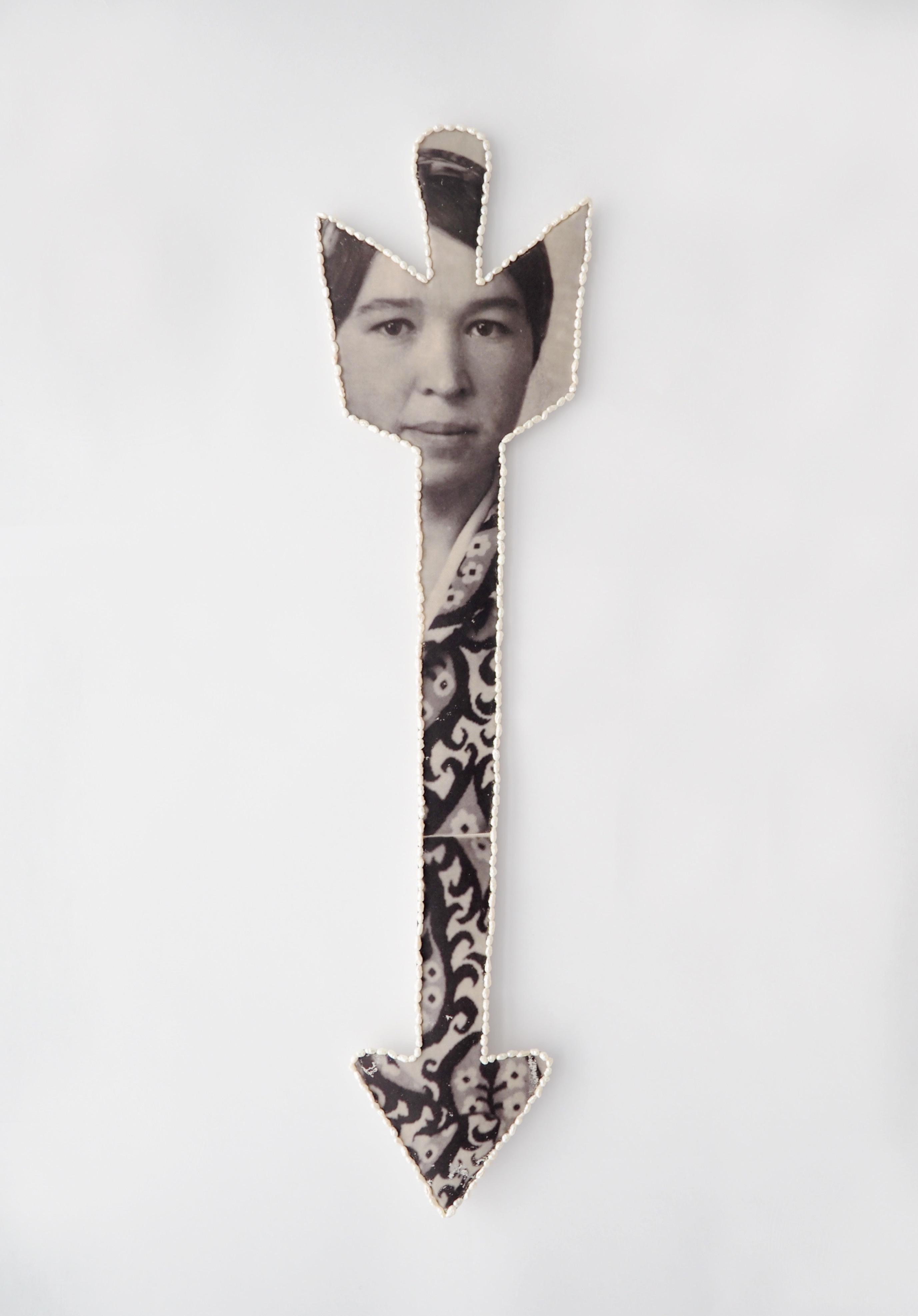
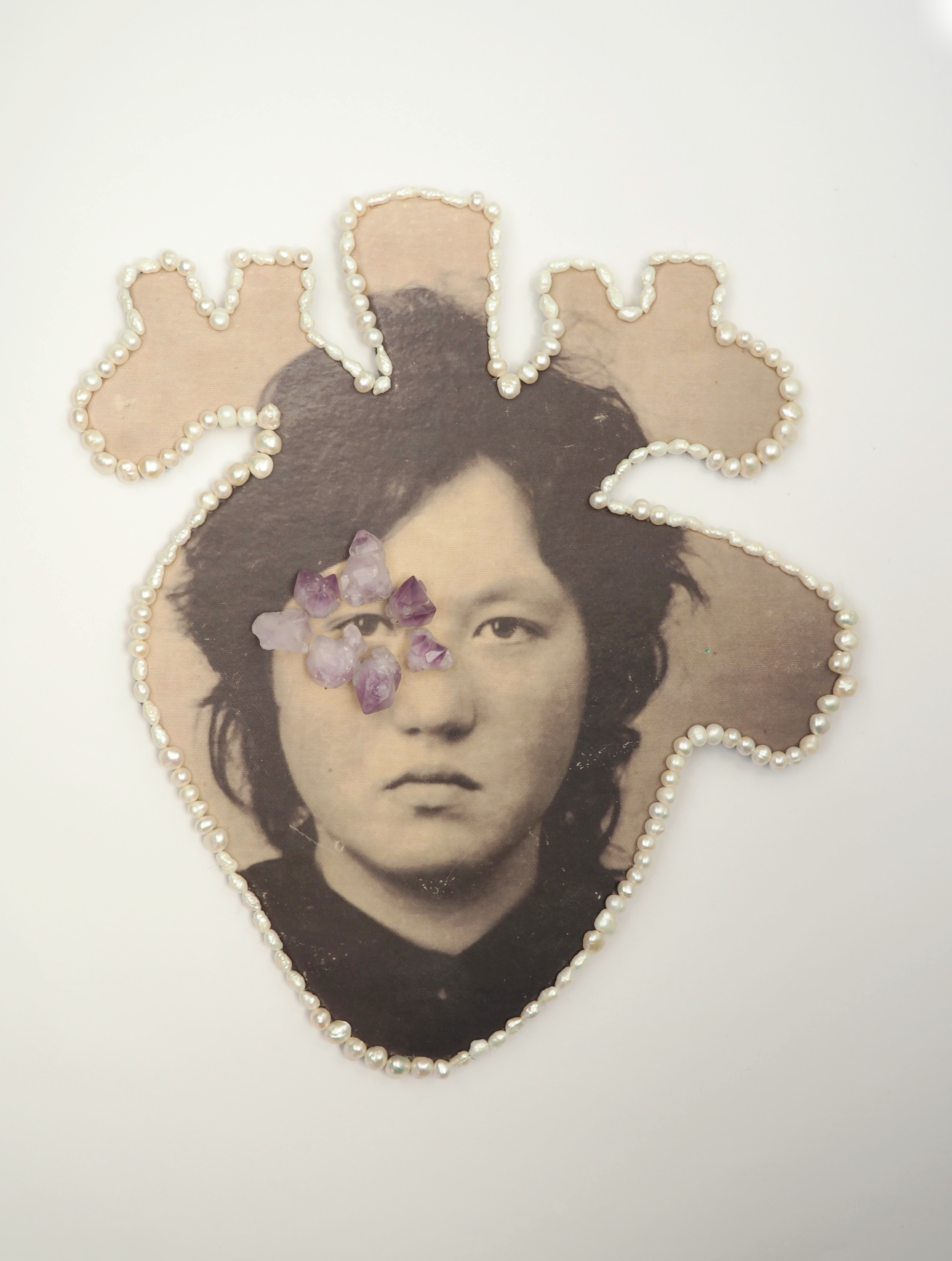
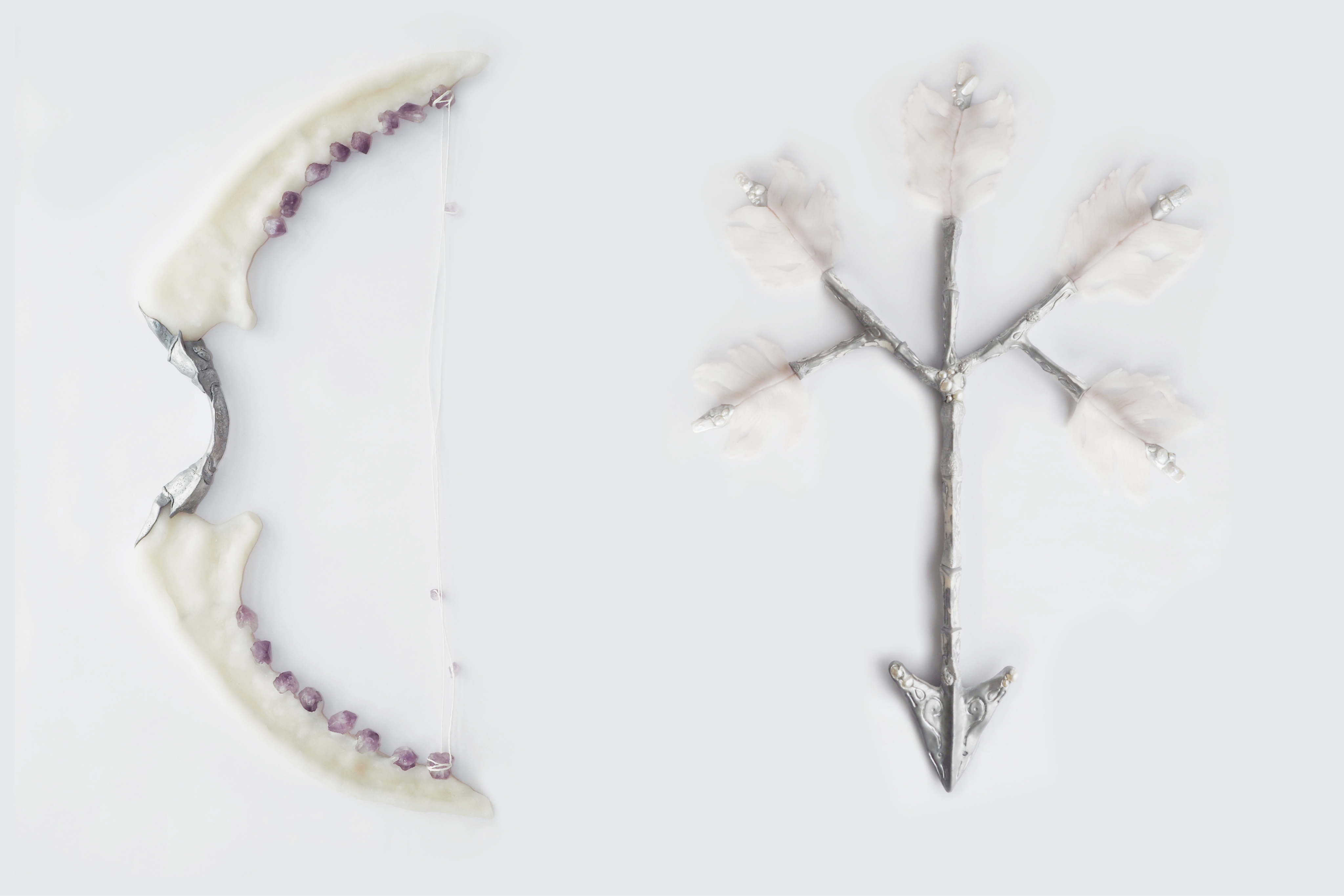
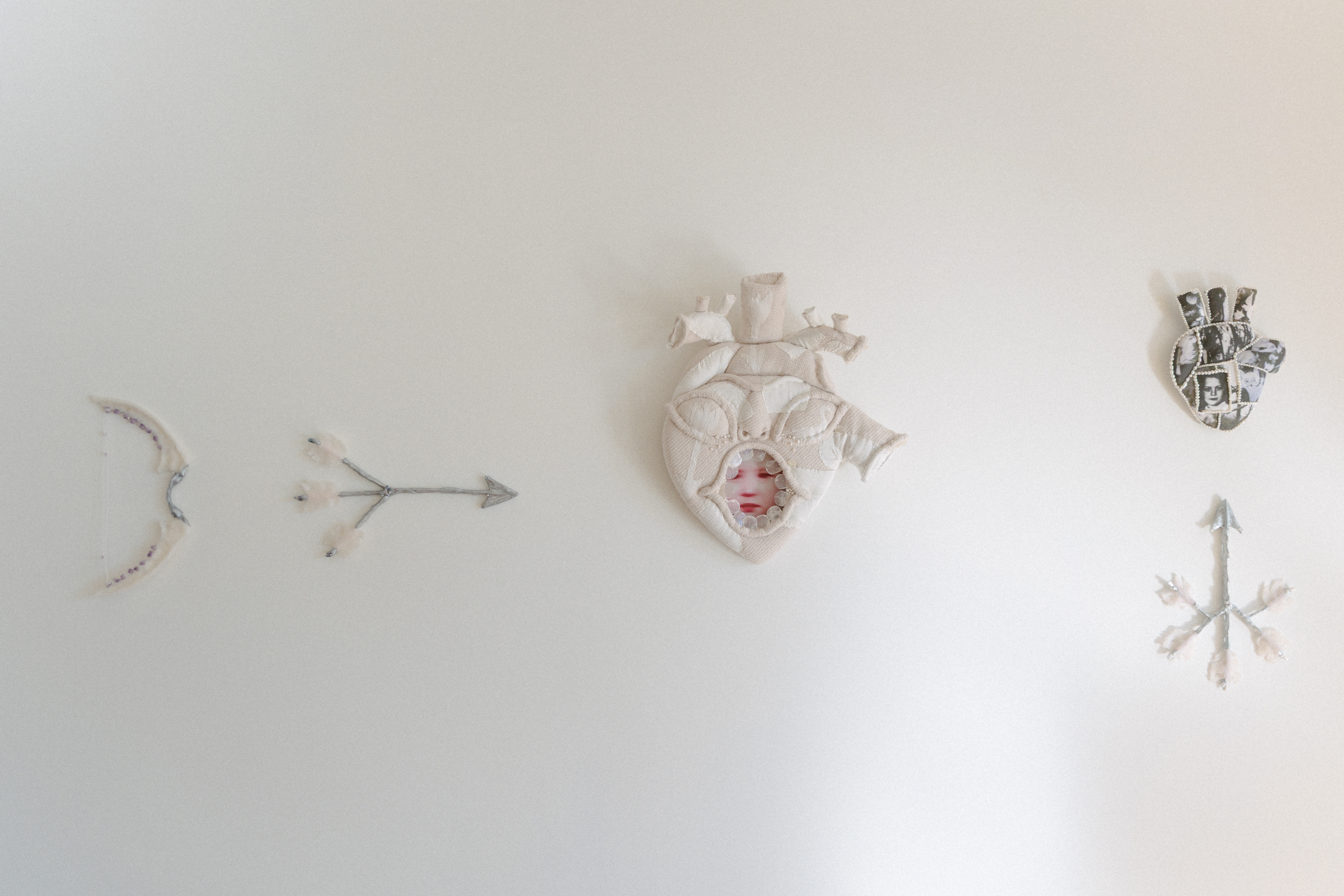
Some of Osipova’s objects feel fossilized yet alive, as if unearthed instead of created. Other forms possess a plush, innocent softness. Her tenderness does not eclipse strength, as the sharp edge of the arrow remains ever present. The bow and arrow appears as a tool of protection as well as play. Inspired by toys of her childhood, it is not an instrument of violence, softened by delicate airy feathers and amethyst stones, but it holds power as a tool of exploration: shaped by hand, wind and attention. The work reminds us that childlike invention is inextricable from resilience.
Freshwater pearls and amethyst stones are used as materials taken from water and earth, reminiscent of the natural world’s quiet endurance. These earthly elements serve as sensorial anchors, at times framing the photographs, at times forming teeth or claws, or appearing as written language itself. In Water, a form recalling a ‘Grandmother’ clock, pearls become text, spelling, шыв, (shiv), the word for water in Osipova's native Chuvash. Time here is fluid; it moves like water, circulating to a place where language, material, and memory converge.
Family photographs, the faces of mothers, grandmothers, children, intimate domestic moments and Osipova herself, are embroidered within Osipova’s objects with reverence and care. There is no space between the ancestral and the intimate, and Osipova tends to her lineage as something with a beating heart, alive and held sacred.
The artist’s use of silk and mesh layered over photographic surfaces creates a visceral experience of memory. Images obscure and soften, evoking the way remembrance feels in the body: partial, sudden, overlapping. The effect is like déjà vu, where recognition comes before understanding.
Osipova’s work feels fiercely protective of her heritage. A mask appears as a guardian, its face in the shape of a heart, baring its teeth made of delicate freshwater pearls. The mask cries pearl tears. Its mouth protects an image of a child, Osipova’s close relative. This figure is not vengeful as it is nurturing, bellowing its heart-song, unapologetic and without fear. It’s familiar on a somatic level, ancient and personal, brought forth from the deepest connection of body and soul.
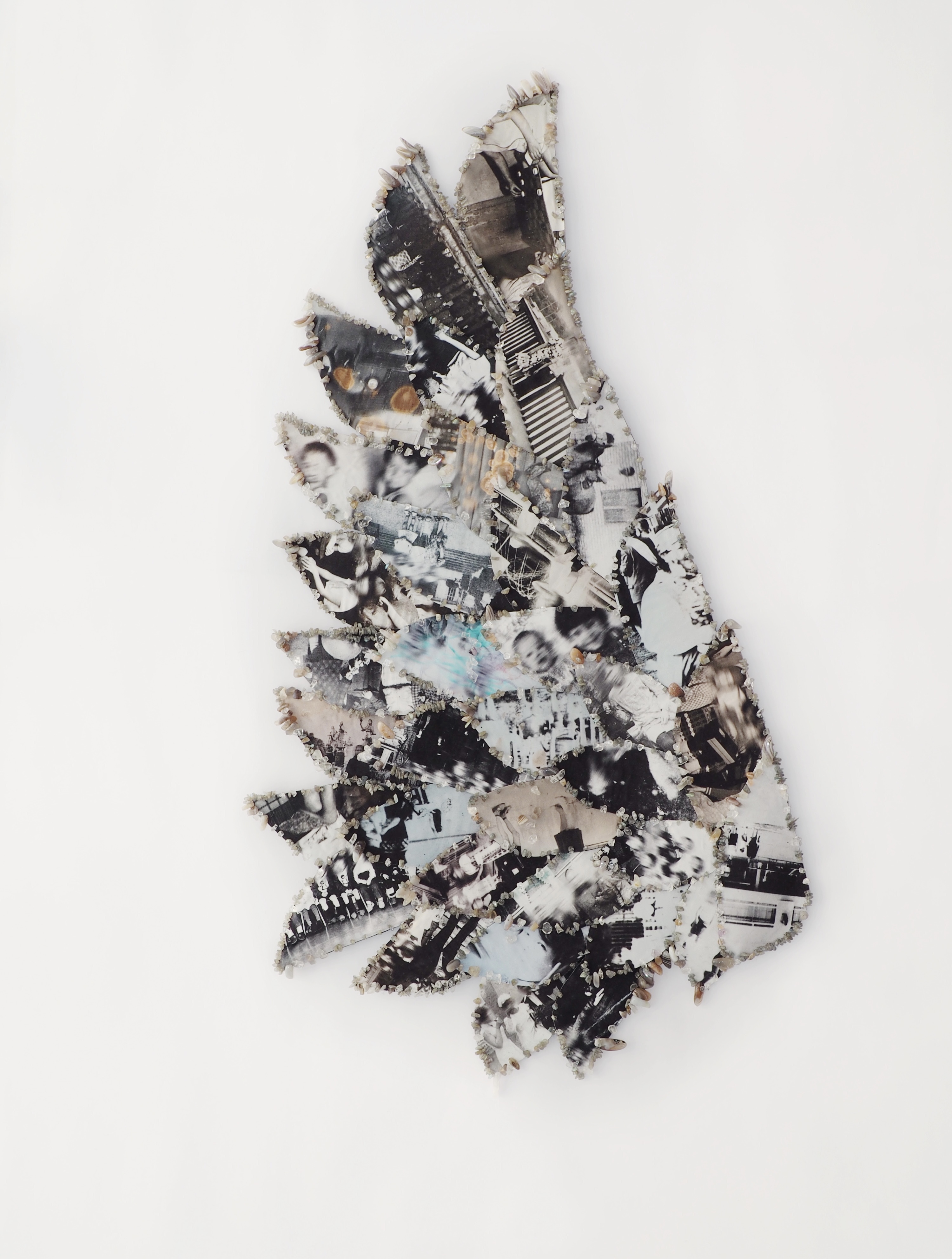
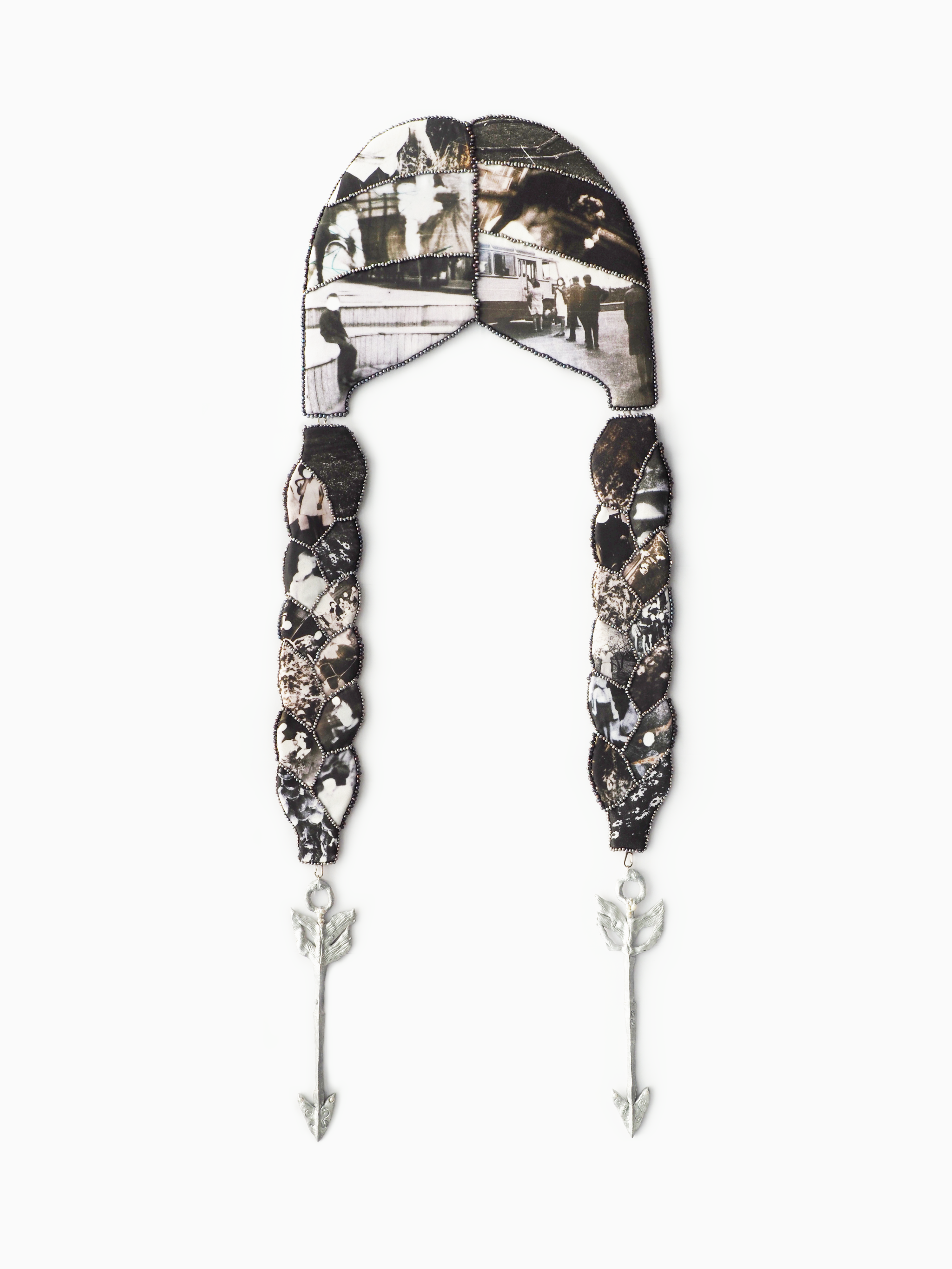
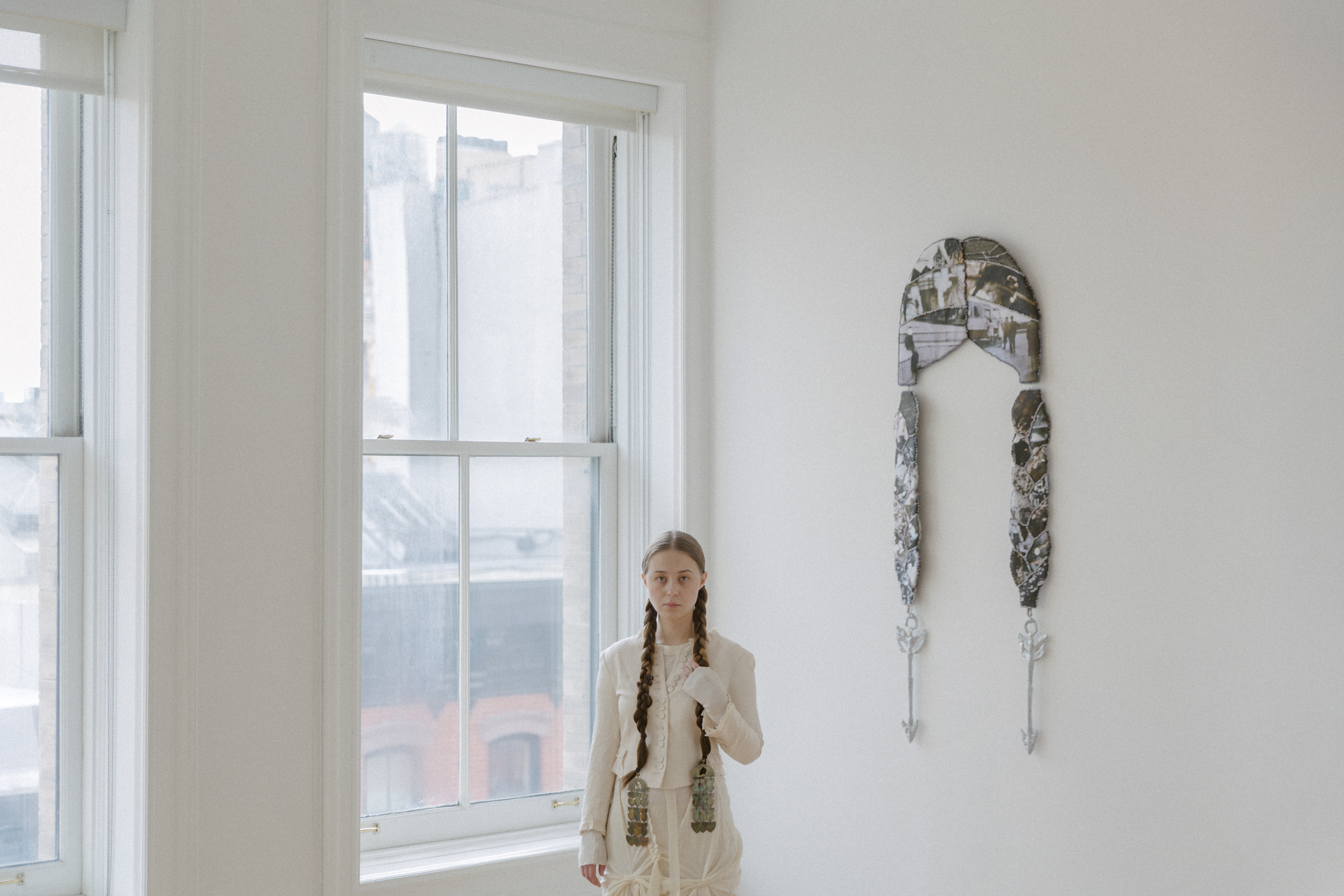
The Wing emerges as one of the exhibition’s most resonant objects. Composed of archival photographs stitched together into a single, expansive gesture, the faces, bodies, and scenes blur into each other, separated only by the crystallized feathers, as if caught mid-motion. The images seem affected by the imagined movement of the wing itself, the act of flapping rendering them unstable, shifting between presence and disappearance. Is it an angel’s wing, or something more earthly and grounded? The form and the function suggest sovereignty rooted in spiritual inheritance. The wing carries the weight of family history and lineage, yet refuses heaviness. It holds lightness and freedom, as if lived memory itself is a catalyst for flight.
Tenderness runs throughout this exhibition. Osipova maintains a childlike wonder and awe that is carefully guarded and preserved by her Chuvash lineage. Innocence and nostalgia are treated as fragile states that must be protected. What materializes is an exploration of self with a maternal protection turned inward.
Osipova’s works can be both toy and artifact, play and ritual, memory and presence. In encountering these objects, we are asked to witness and temporarily steward these tangible memories, while the works maintain their autonomy. Together they create a living inheritance, where memory is embodied and nurtured through craft, enduring across generations.
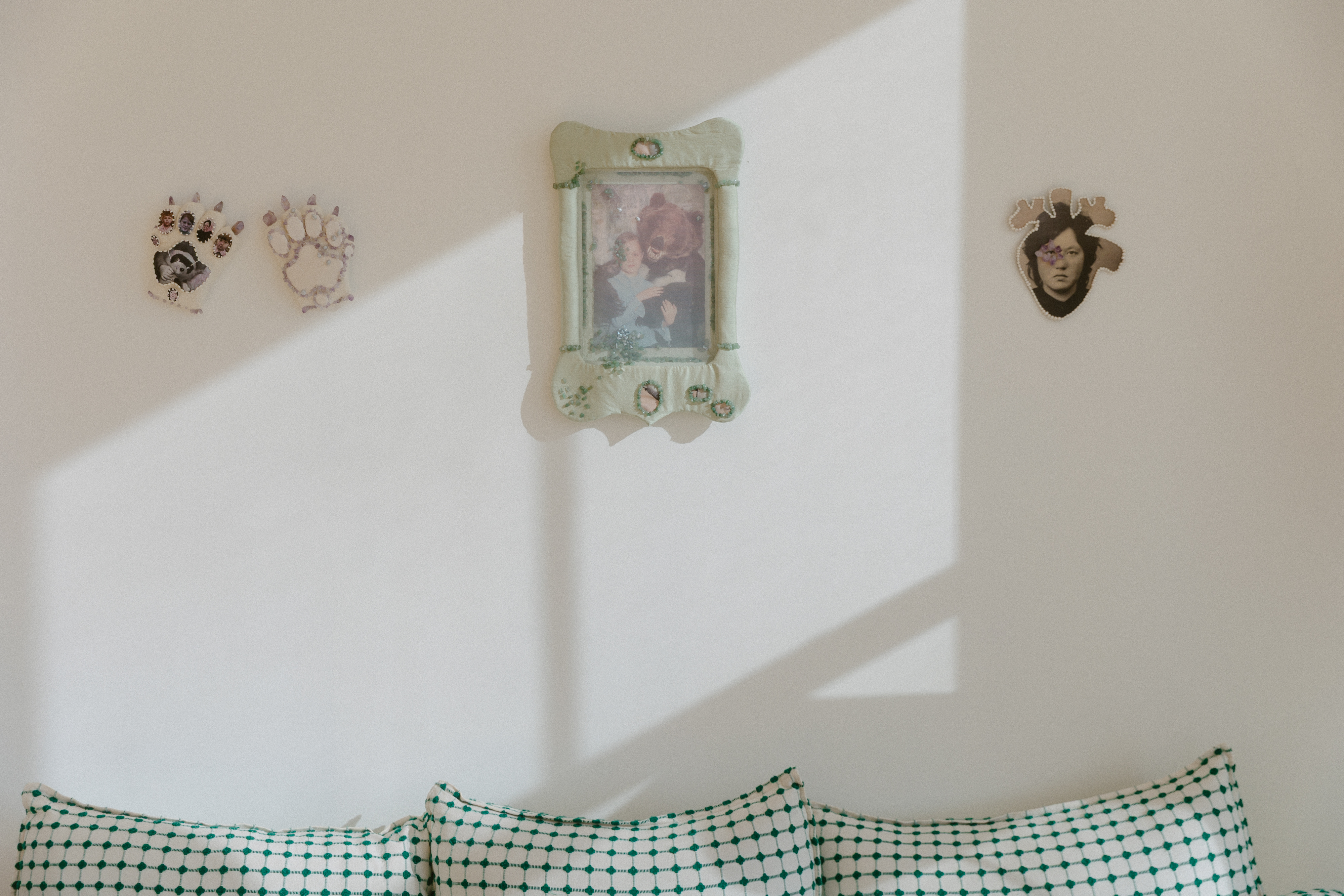
INSTALLATION VIEWS

ABOUT POLINA OSIPOVA
(b. 1998). Based in the UK.
Polina Osipova is a multidisciplinary artist whose practice explores Indigenous Chuvash
legends and myths at the intersection of craft and the archaeology of collective memory.
Drawing on the knowledge and expertise of her female ancestors, she reflects on
inherited traditions through textiles and archival family photographs. These materials
become a means to trace connections between past and future—both temporal and
timeless—creating portals that bridge the digital age with the analogue.
Recurring photographic motifs in her work evoke the presence of untold narratives
embedded within her family archives. Working across textile, sculpture, wearable forms,
performance, and photography, Osipova conceives these mediums as intrinsically
interconnected, forming an organic and unified body of work.
The wearable sculptures and objects she creates function simultaneously as
autonomous artworks and as garments activated through performance, ultimately
becoming part of an evolving personal mythology
Visit artist page